Amid increasingly uncertain global dynamics, President Prabowo Subianto outlined a new direction for Indonesia’s energy policy.
At the Indonesia–Japan Business Forum in Tokyo, he emphasized that palm oil will be a key factor in achieving a major target: ending diesel imports by 2026.
The message was straightforward, yet meaningful. Indonesia, Prabowo said, does not want to continue relying on fossil fuels from abroad. While many countries are busy securing energy supplies, Indonesia is instead starting to build self-sufficiency from within—from plantations, from the land, from the resources it already possesses.
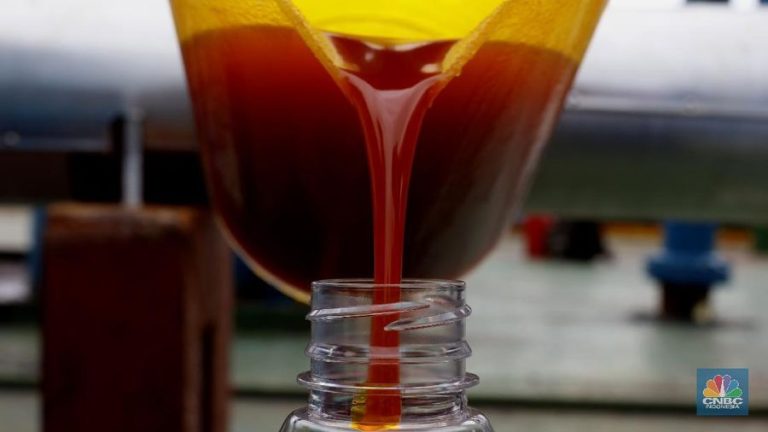
One concrete step being accelerated is the implementation of B50 biodiesel, a blend of diesel fuel with 50% palm oil-based biofuel. This program is an extension of the existing B40 program and serves as a foundation for significantly reducing energy imports.
“With these efforts, we will be in a secure position to face global uncertainty,” said Prabowo.
The target is clear. With the full implementation of B50, Indonesia is projected to no longer import diesel fuel. Currently, national diesel demand is still around 4.9 million kiloliters, partially met from abroad. This figure is being reduced to zero.
Minister of Energy and Mineral Resources, Bahlil Lahadalia, stated that the conversion to B50 will have a direct impact on saving the country’s foreign exchange. “If we fully implement B50, diesel imports can be stopped. We can retain foreign exchange domestically,” he said.
Government data shows a positive trend. Throughout 2025, biodiesel distribution reached 14.2 million kiloliters, or 105.2% of the target. This achievement contributed to foreign exchange savings of IDR 130.21 trillion and a reduction in carbon emissions of up to 38.88 million tons of CO2 equivalent.
Furthermore, palm oil downstreaming also drives increased economic added value. Processing Crude Palm Oil (CPO) into biodiesel is recorded as generating additional value of up to IDR 20.43 trillion.
Furthermore, the government is also preparing a long-term strategy through the development of bioethanol based on corn, sugarcane, and cassava. This program is aimed at supporting blended fuels such as E20, while expanding the use of agricultural commodities as energy sources.
In addition to biofuel, Prabowo also highlighted Indonesia’s vast geothermal energy potential. With the world’s largest reserves, this sector is considered capable of becoming the backbone of clean energy in the future.
Despite high optimism, the government remains cautious. B50 trials are scheduled to be completed in the first half of 2026 before full implementation in the second half. Furthermore, the RDMP refinery project in Balikpapan is also expected to strengthen domestic production capacity.
Indonesia’s move reflects a dual strategy: maintaining energy security while accelerating the transition to clean energy. Amid global uncertainty, this policy direction is a strong signal that Indonesia is not only resilient but also prepared to move forward.
If all goes according to plan, 2026 could be a turning point, when Indonesia truly emerges from the shadow of diesel imports, and palm oil becomes the energy of the future.